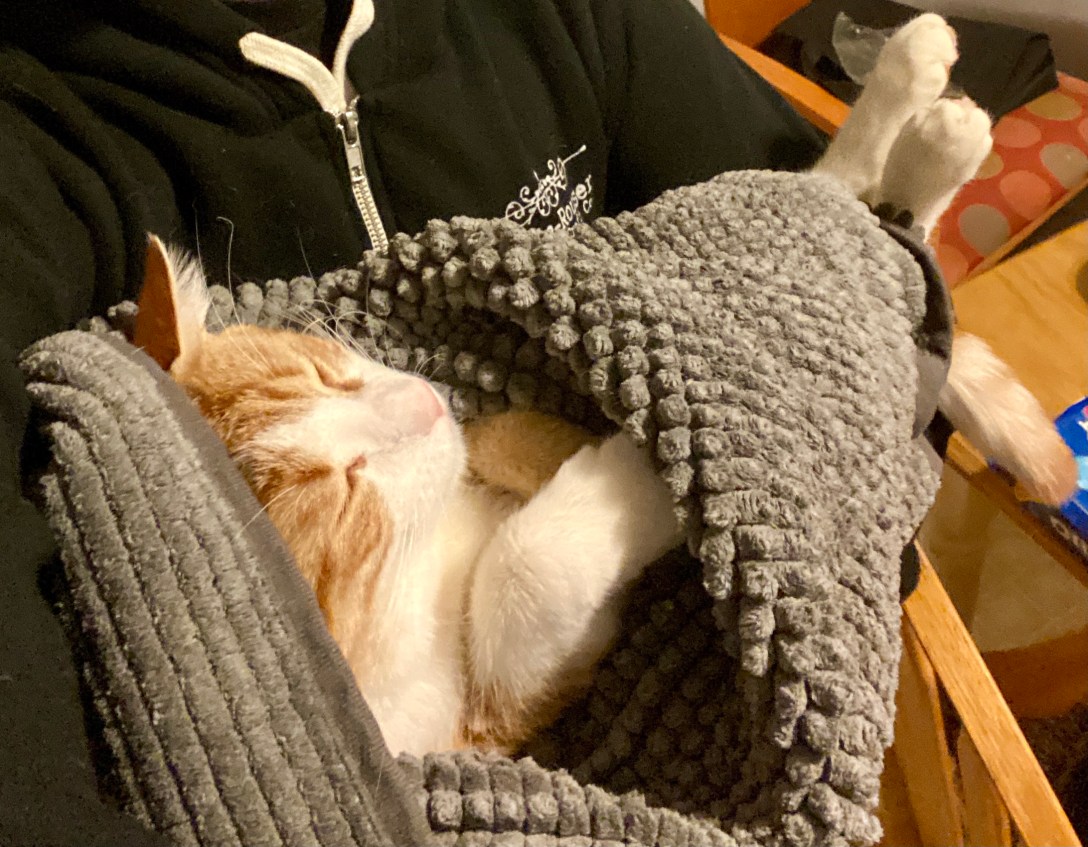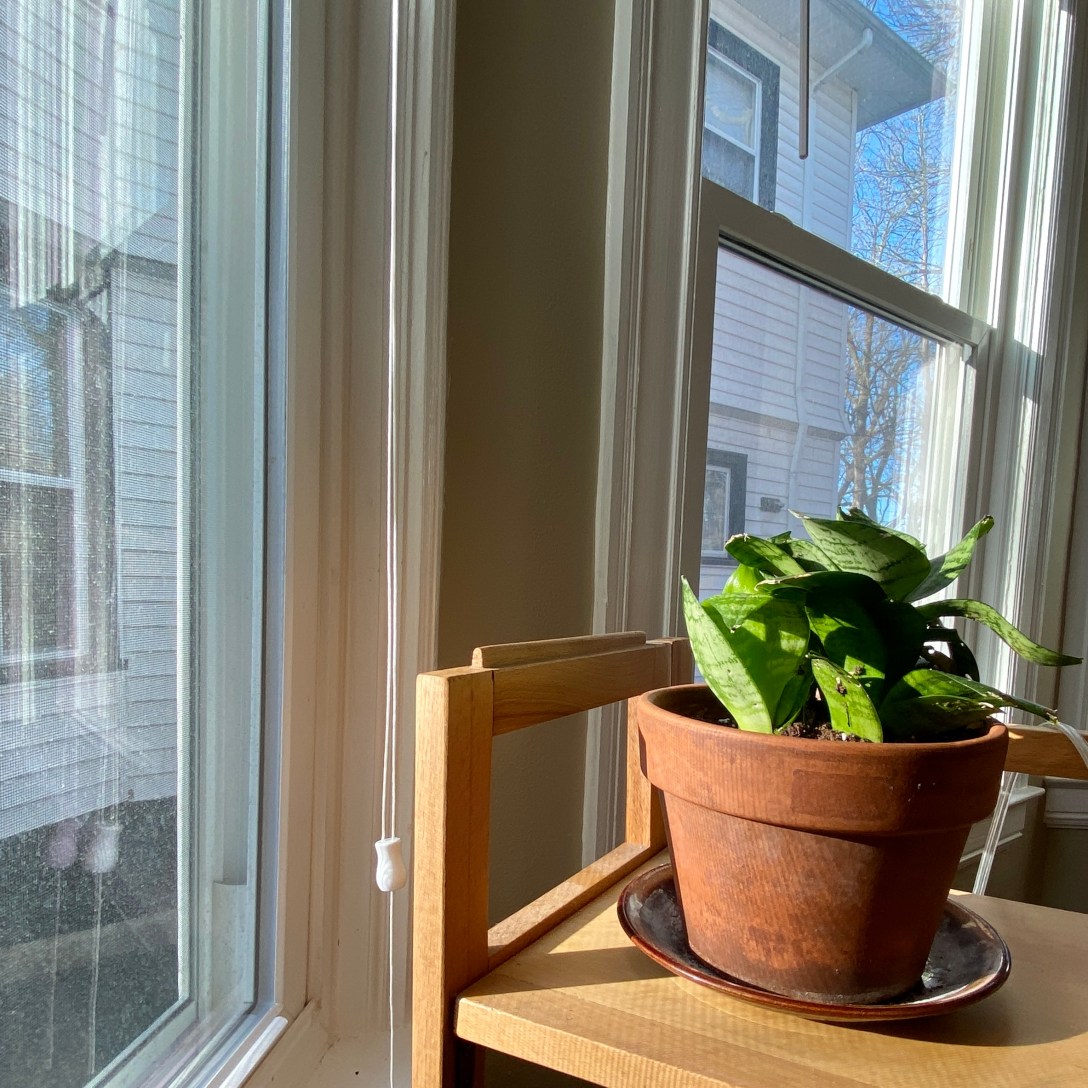
I’ve been writing about some heavy shit recently, so tonight I want to talk about something more joyful: house plants. I’m obsessed. I feel like a lot of people got super into house plants over the past two years. We were stuck inside in quarantine for so much of 2020: forced to face our own inner worlds for months at a time, as well as our dreary apartments that we hadn’t quite gotten around to fixing up. We needed relief.
We needed something to care about, other than the global pandemic and the presidential election. We needed something that was our own, something we didn’t have to do in tandem with our housemates, who were ALWAYS AROUND (why were they always popping up in the room we wanted to be alone in?). We needed some friggen house plants.
I harbor real love for my plants. They’re like little babies, except they don’t wake up screaming in the middle of the night, or suck up all of your hard-earned cash as soon as you put it in the bank. They’re the perfect progeny: demanding just enough attention that you feel accomplished, even benevolent, for nurturing them, but not so needy that you feel overwhelmed and desperate for a break. Plus, I’ve been learning so much. Now I know that you can propagate almost any plant, as long as you have time and a lot of patience.
When I graduated from the University of Rochester in 2019, a close friend gave me his Pothos babies that he had been rooting in plastic water-bottles. I planted them in hanging baskets that were WAY too big for their tiny little roots. Not knowing that at the time, I just patiently waited for them to grow, keeping them in a sunny spot on our porch in the summer, and by a window upstairs in the winter. Now, they’re huge, healthy vines that cascade down into my home studio.
Plants are amazing for sharing love, and passing down traditions. I’ve propagated more Pothos babies from those original plants than I can count, and gifted a precious Pothos baby to a close friend. I also gave a Pilea pup to my mom to bring back to her farmhouse in Vermont. For awhile, she sent me daily updates on how the plant was doing. It was so cute. My grandmother has a 30-year old jade tree, with a thick trunk, that I absolutely love. When I was there last, I collected a jade pup from this primordial mother, a small, dark-green baby that’s now growing happily on my windowsill in Rochester.
It feels really lovely to know that the plants you’re growing can actually make other people’s lives brighter, not just your own. Sharing plants is a huge reason I love growing them.
For more propagating madness, I picked up a couple of Arrowhead cuttings from my neighbors, which I rooted in water. Most of them didn’t make it, since I was pretty inexperienced and had no idea how much to water anything, but one plant survived. I’ve had that little one for over a year now. Once, she was down to a single leaf, and I valiantly nursed her back to health. Now, she’s healthy and happy with lots of leaves, sitting on my piano in front of a south-facing window.
I find it hilarious, and touching, that word is getting out that I’m obsessed with plants. One friend moved away from Rochester for a year-long graduate program in Spain and left her house plants with me to “babysit.” I happily welcomed her Cat Palm and Zebra succulent into my growing indoor jungle. It’s a bit more pressure taking care of someone else’s plants, but I like the challenge.
My mom, seeing how excited I was about all of my house plants, brought me a Prayer plant as a gift. She said it was my grandmother’s favorite plant. It made me feel more connected to my family. Now, whenever I water my Prayer plant or trim yellowing leaves, I feel like I’m with my mother and grandmother.
I’ll tell one last plant story, and then I have to go to sleep. My dad, who is a real estate agent in Vermont, was showing a house that had been abandoned for a few years. It belonged to an old couple, both deceased now, and the family was finally selling it. Sitting on a small stool by the front door, forgotten in its terra cotta pot, was an ancient aloe plant struggling to survive. This thing was huge. It mostly consisted of dry, yellow stalks. Just the tips of the plant were green, juicy aloe leaves. He saw it, and immediately knew what he had to do. He brought it to Rochester as a gift for me.
I was ecstatic. I can’t even tell you how excited I was to have this nearly-dead aloe plant. I immediately went to work digging out individual roots, cutting off excess dried leaves, replanting the big old plants in their own individual pots, potting the healthier pups, and composting the parts that were too far gone to save. I now have an entire guest room FULL of aloe plants. Some are large, some are tiny, some have long yellow stalks, and I love them all. A lot of them have started growing pups, and I can’t wait until I have pots overflowing with green, healthy aloe. I have no idea what I’m going to do with all of it, but I don’t really care.
Now that I’m in Florida, I genuinely miss all my plant babies. They bring me so much joy. When I’m feeling really anxious, angry, or lonely, watering and pruning my plants is one of the only things that can bring me out of my funk. Or at least make me feel less alone.
Here are the house plants I’m taking care of right now:
-Laurentii Snake plant
-Whale’s Fin Snake plant
-Golden Pothos
-Jade plant
-Vittatum Spider plant
-Pilea (Chinese money plant)
-Cat Palm
-Sword Fern
-Dragon Tree
-Zebra plant
-Elephant Bush
-Alice evans succulent
-Arrowhead plant
-Peace plant
-Aloe Vera
–Succulent Bush Senecio
Here are the house plants I’ve managed to kill so far:
-Mexican Snow Ball
-Ruby peperomia
-Echeveria ‘Perle von Nurnberg’
-Lavender (I’ve actually killed two different lavender plants….)
-English Ivy
-Strawberry Begonia
-probably more I’m forgetting
Tag: writer
On the Cost of Healing
I can’t start at the very beginning of this story, because that would overcrowd the format I’m working with – the blog post. Instead, I’m going to start in the middle, and it won’t have a proper ending. Make of it what you will.
I have carried my trauma with me, in my body, belief-system, and behaviors, since I was 6 years old and was molested for the first time. What is the actual cost of that trauma? What is the cost of healing? Spoiler alert: it’s $94,090. You’ll see how I arrived at that number soon.
As a high school sophomore, I was already resigned to give my power over to other people. That’s how I learned to be in relationship with someone else. When I was 6, a family friend molested me. When I was 14, a boy I was romantically involved with sexually assaulted me. These were my first sexual experiences. I assumed that this was how it worked: I was trained not to focus on myself, but rather to focus all my energy on somebody else’s desire. I knew that their will would prevail no matter what.
So it’s not surprising that, as a 16-year old sophomore, convinced I had no power in a relationship, I got romantically involved with an older boy who abused me. The boy was in college already, while I was still chugging through high school, so the power-dynamic was already skewed in his favor. Out of the nine behaviors Rainn.org lists as warning signs of intimate partner abuse, this person consistently practiced six of them.
Finally, at age 19, I entered into my worst, and last, abusive relationship. This person was physically violent. He tore apart my self-confidence every day, until I eventually didn’t believe my own sense of reality and couldn’t escape.
Until recently, I carried these abuses in my body and belief-system as “normal” and “okay.” Until recently, I blamed myself for having intense reactions to the abuse. I was too flaky, too emotional, too sad, too dark, too intense, too obsessive, too empathetic, too involved, and too messy.
What has it cost to face this trauma, and start healing from it?
–$12,000 (therapy 2019-2021, 50 weeks/yr, $80/session)
–$5,000 (therapy 2018, 50 weeks/yr, $100/session)
–$4,000 (therapy 2013, 50 weeks/yr, $80/session)
–$1,050 (psychiatry, $175/session)
–$1,000 (dance & somatic classes, $5-$20/class)
–$640 (body work sessions, $80/session)
–$200 (gas for travel to and from appointments)
–$150 (Qi Gong classes 2016, 10 weeks, $15/class)
–$50 (medication)
So that’s $24,090 in expenses. Now let’s examine how trauma/healing work has affected my earning power in the workforce over the past 5 years.
–$25,000 forced rest year: (due to untreated clinical depression, anxiety, and PTSD, I needed to take the entire year to rest/heal/process from 2016-2017. For that year, I was unable to work towards a BA degree, work at a paying job for more than 15 hours a week, or network in my field.)
–$45,000 reduced earning power since graduating with a BA in 2019 ($15,000 a year, due to PTSD symptoms – I’ll write more about this later)
That’s $70,000 of lost income due to the effects of my trauma.
If I add that loss to my expenses, the total cost of trauma and healing for me and my family has been $94,090. That’s a shit-ton of money.
These costs are STILL ADDING UP. I’m still healing. I’m still not able to work as many hours per day, or with the same focus, as I could before developing PTSD. That’s income I’m missing out on every single day. I’m still putting all I’ve got into trying to live the way I want to live. Trying to grow out of this trauma, instead of letting it slowly destroy me. And I haven’t even STARTED to discuss how privileged I am that I have a family who has been willing to financially support my healing process.
Healing from trauma is expensive. I didn’t have a choice in whether or not to be traumatized. But unlike cancer, or the flu, which occur without human consent, a person made a choice to abuse me. Multiple people, actually. Those people made decisions, and I am paying for those decisions.
I’m just putting it out there: maybe there’s a way that the people who inflict trauma can pay, financially, for the healing process. Any ideas?
On Settling
I was born in 1995. I’m smack-dab in the middle of the “Millennial” generation. I grew up on VHS tapes, landlines, and tucked-in turtlenecks, but never used a payphone or a record player. I was taught that I was special, that my unique capabilities and personality made me perfectly suited for…something. Whatever that ‘thing’ was, be it a person, a job, or a lifestyle, I was meant to find it, pursue it, and never settle for anything less.
This ‘thing’ wasn’t supposed to pay my rent, or provide a stable life. Nope. That wasn’t the priority. Instead, it would supposedly make me happy. It would fulfill my potential. That was the ultimate goal: to fulfill my potential for joy, for being fully human. This ‘thing’ would make me fully myself.
Settling was supposed to feel like boredom, stagnation, or mundanity. Notice a small lack of passion for your partner? You’re settling. Don’t feel quite right all the time in your job? You’re settling. Doing mundane work that doesn’t seem to have a higher purpose other than putting food on the table? You’re settling.
So yeah. It turns out that “not settling” can be pretty confusing. The “not settling” mentality can keep you from actually living fully. It’s making us more anxious, less happy, and just generally less OKAY. It’s as if we owe it to the world, to the universe, to never settle. Because to do that would be to rob everyone else of our gifts. This messaging is constantly pushed down our throats in ads, Instagram posts, and media, generally aimed at us “snowflake” Millennials:
“Don’t stay in a boring job.”
“Follow your bliss.”
“Find your purpose.”
“Be uniquely you.”
“Never compromise yourself.”
“Your perfect person is out there, you just have to make room for them in your life.”
This shit doesn’t lead to happiness or fulfillment. Because we’re never gonna get there. “There” is always changing. We’re always searching, striving for the next best thing, and we’re never gonna feel present. Not only are we never sure if we’re doing the right thing, because we’re terrified of settling, but we’re also just not attending to the miraculous, ordinary shit that’s happening in our lives.
Then, there’s the constant questioning. It takes a toll. It’s exhausting. It’s anxiety-inducing. As my partner Chris wisely said when I mentioned I was writing this piece, “If you don’t settle for something, you never get to enjoy anything.”
Then, there’s the issue where “not settling” can trick you into thinking that you’re moving on to bigger and better things, when really, there you still are. The same ‘you’ that you’ve been dealing with this whole time. You don’t all of a sudden grow wings and a halo because you move to a different house, or meet somebody new, or create a new online business where you print inspirational quotes on stuff.
And, the more I think about it, the more “not settling” feels like avoiding real connection and growth. If you don’t settle into something, you don’t ever have to compromise. You never grow in relation to another person, or in the context of a challenge. You’re an island. You’re holding out for your “best” self, in the form of the “best” thing outside of yourself. You’re a self-perpetuating carousel.
The real question is not, “Am I settling?”
The question is, “Is there something hurting in me that I need to attend to?”
Here’s the heart of it for me: “not settling” means running away from the mundane. But the mundane moments in my life are what make it all worth it for me. My cat jumping up onto my lap while I practice piano. My partner making us egg sandwiches for breakfast. Drinking a cup of coffee in the morning. Finding a great radio station on a road trip. Listening to a particularly poignant podcast. Looking out into the trees through the big window in my office, forgetting about my to-do list for a second. This is it. And I’m not selling myself short because I actively love, notice, and cherish those things.
From now on, I want to stop avoiding settling. Fuck it. I’m rebelling against all the messaging. I want to be present. I want to be bored. I want to revel in the absolute miracle that we’re here, on this earth, together, and alive. And I don’t want to do it in Bali. I want to do it in my fucking living room.
On Overwhelm
When I was little, the holidays were always a time of extreme giggling and waking up way too early with my cousins. I remember laughing so intensely that my small body felt like it was bursting apart. It felt delicious and fun, but at times the sensation got too big for me to handle. Sometimes, after rolling around in pure merriment for too long, I would start to feel out of control. I’d feel overwhelmed.
I had a natural solution to this feeling of overwhelm. I remember this clearly. I’d pick up a soft blanket. I’d pull it over my head for a few seconds, letting it fall down gently around my face. I’d close my eyes, breathe, and silently tell myself it was alright to calm down. My cousins and sister would be screeching and bouncing all around me, but I had this one small moment of solitude in the dark. I’d feel my body come home to itself, like a houseplant responding to water. Then I’d lift the blanket up and start playing again, refreshed and regulated, ready to dive back into those large sensations.
This response to overwhelm was automatic when I was a kid. I didn’t have to think about it, or strategize in any way. I wasn’t dissecting theories about the nervous system’s response to stimulation. I hadn’t read “The Body Keeps The Score,” by Bessel Van der Kolk, or “Unbound,” by Tarana Burke. The only resource I had in that moment was my own body. And I knew what I needed. Not only that, but I was able to provide it for myself.
Let me say that again: I knew what I needed, and I was able to provide exactly that. With no outside help. In the moment. Without hesitation. Without inhibition. Without ANY THOUGHT WHATSOEVER.
Here’s my question: where, in the crevices of my childhood, (let’s include upbringing, personality, socialization, traumatization, and formal education in the “childhood” category), did I lose my ability to soothe my own overwhelm? Was it a mere forgetting, or rather a more sinister, slow unlearning? And, will it ever feel automatic again?
Overwhelm* happens frequently for me. It used to happen when I was laughing and playing a little too hard. It happens now when I’m in a really crowded public space, when I’ve been taking care of other people all day, or when too many things are demanding my attention at once. Overwhelm feels like someone suddenly opened an umbrella inside my chest (one that’s way too big to fit behind my ribs) and it’s pressing pressing pressing against my bones, my skin, my throat, my heart, threatening to take away the life inside me if I don’t do something quickly.
Overwhelm often leads to panic, and because that sensation feels so urgent, it’s almost impossible to interact with the world until I’m able to regulate again. As an adult stuck in a state of overwhelm, do I use the blanket method? The automatic childhood response to overwhelm?
No.
Instead, I hide from my overwhelm.
I go into dorsal vagal mode, which is the shut-down method our body uses when it’s in a state of hyperarousal. I feel trapped inside of myself. My body feels numb. I start bumping into doorframes, dropping things I would normally be able hold on to, and, finally, lying in bed watching Netflix out of desperation. It takes conscious thought to invite myself out of dorsal vagal (the feeling of “I can’t”) and into sympathetic (the feeling of “I can”). Then, with a lot of effort and focus, I can spend a few minutes experiencing and “being with” that sense of panic, using non-judgmental awareness, and pull myself up into ventral vagal (the feeling of “safety”).
Through body work, therapy, close relationships with people I love, mindfulness, and dance, I’ve slowly learned that I do have the ability to self-regulate, take care of myself, and attend to my “overwhelmed-ness” when I need to. I’m developing the habit of gently delivering myself out of shut-down and into safety. But it has taken years, and will take many more years, for this sense of security and trust in myself to return.
I don’t have answers, but that’s not what I’m here for. I’m here for the questions – that’s what keeps me going. If overwhelm always existed, and so did my natural self-healing response to overwhelm, where did that instinctive response get suppressed along the way?
*My “overwhelm” in adulthood may show up differently from other people’s, as I have been diagnosed with Post-Traumatic Stress Disorder, as well as anxiety and depression that stem from the PTSD.
On Desire
I’m lying in a hotel bed, halfway between New York and Florida. I’m escaping, in a sense. From what, I’m not entirely sure. I could be slithering away from my relationship, which looms around me, a dark mass of supportive, attentive love. Sometimes it disgusts me, how such a broken, oozing creature like myself could be immersed in this golden affection. Or maybe I’m sneaking out of my roomy upstate New York house, so secure, so stifling, like someone is ever so slowly smothering my breath away with a goose-down pillow.
Or, if I’m lucky, I am escaping expectations: my own urgent hope that I will fulfill my potential (whatever the fuck that means), my partner’s hope that I will be kind, my students’ hope that I will be inspiring, my fans’ hope that I will be entertaining, Instagram’s hope that I will be beautiful and toned, and my community’s hope that I will “leverage my privilege.” Other people’s dreams lodge in between my ribs like congealed Mod Podge. I’m not sure if this dripping, monstrous glob is concealing my desire, or if it’s gradually forcing desire out of me forever.
Or, maybe, I’m escaping myself. If I’m being really honest, I might be running away from my own stubborn refusal to allow my desire to take up space. Sometimes (often) I am disgusted by my own light. It threatens to burst out, innocent, enthusiastic, from tiny cracks in the thick fortress I’ve built around my Self. How dare this light come out. How dare any light get in at all. How dare I want my light to be seen. How dare I inspire light in someone else. How dare I desire. How dare I desire.
What is desire, anyway?
To me, desire is fear. Desire is the stealthy siren, leading my body to the sharp crags and unrelenting surf beating down on the shore. Desire knows that I am both the shore and the body, and it resolves to take full advantage of that. Desire doesn’t care about consequences, doesn’t delight in hierarchies or flowcharts.
Desire is wild, and wild is fear.
Wild is disintegration. Loss of self. Loss of control. Loss of power. Loss of everything. Desire doesn’t take with cautious fingertips. It takes and takes and takes, scooping great mounds into its calloused hands.
Is it possible to draw a line between joyful attraction, bubbling over in rainbow colors, and dangerous obsession? Could I pinpoint the moment when something pleasant suddenly turns rank and insidious? Would I even realize that anything had shifted at all? Would I notice that I was disappearing before the last wisp of me fell away?
“But,”
you might ask,
“if the desire is yours, yours alone,
can’t you trust it?”
That remains to be seen.
On Childhood
childhood dream place
wings and moss in abundance
light shining through us
On Flight
Scruffy, angelic white puffs blow in the wind outside my plane window. My sister says it’s an invasive species. It seems ludicrous that something so beautiful could be so violent. We take off, and the white puffs give way to dead grass, then an expanse of grey sky. I’m thinking about elementary school birthday parties in dimly-lit bowling alleys. I can taste the greasy pizza soaking through the paper plates. Huge sheet cakes with frosting so sugary the granules are rough on my tongue. Blue lettering. A barbie with hair that grows when you pull a string.
Now we’re over the ocean, spots of white littering the indigo blue water. I can still see the lines of tiny boxes on the shore, distant now. I’m thinking about how someone once described humans as a parasite, quickly spreading across Earth, taking and digging, extracting all the life out of our host. Sucking her dry. The CDC describes a parasite as “an organism that lives on or in a host organism and gets its food from or at the expense of its host,” so this seems pretty accurate. I wonder if I agree with this image of my species. It’s certainly romantic, but makes my skin feel too tight for my body, especially from up here in this plane, where our parasitic behavior is so clearly laid out for me to see. The Bay, taken over by human dwellings, along with all the necessary dwelling-accessories. Tiny lines, beige against green: roads. Lighter bits bunched together in squares: farmland. Chunks of sun reflected, glinting: office buildings leering up at me.
Now the mountains are below us. They are bare compared to the city we left behind. Strong in their solitude. It’s been awhile, a long moment of just spacing out in the general direction of the horizon, but I haven’t been able to forget the parasite analogy. Will these little pockets of human disease eventually spread to cover the entire surface of the earth? Will the faraway mountains soon be teeming with scurrying people, gardens, rats, parks, highways, restaurants, and chlorinated pools?
In the distance, the mountains have huge wrinkles. Elephants, heavy velvet. These mountains know deep change: they are not static. Constant erosion. Surrender. Receiving. Yielding to the rain that flows down their many faces. They are relinquishing and relenting. I think the mountains must have to fully know themselves to accept such complete and uncontrollable distortion, without protest.
I think about how often I used to yield to people and experiences. When I was 18, the thrill of that surrender was expansive. It felt like a dripping diamond necklace, or a huge, cool lake waiting for me to jump into the deep waters. The thrill was like water, flowing around me, through me. A womb and a river simultaneously. I was at home in surrender. I trusted that I, or something else, something benevolent and good, would pull me out if it got to be too much. If I got too chilled, or too wrinkled.
I didn’t know myself yet. Or maybe I knew myself too much already, and the world would not budge to accommodate my knowing.
The people I surrendered to were not ready for the trust I immersed them in. They were not the rain. Was I the mountain? Was I the rain?
These people submerged me. And I drowned. They told me I couldn’t swim, should not swim. So I stopped swimming. That was part of the yielding, right? I had to yield. To make the complete shift to embody someone else’s experience, I had to leave my own body and experience behind. And so I went still. My limbs atrophied, my mind filled with grotesque images of floating heads and penises, surrounding me in a suspended, tangled mass until I couldn’t breath anymore, and drowned.
What was the yielding, then? Suicide? Or was it just a big misunderstanding? Back then, I assumed that everyone was exactly like me. I saw a face and thought, “behind that face is a deeply-feeling, spectacular spirit that takes in everything, yields to everything, and knows itself fully.” I thought everyone was tapped into the huge, cool lake of it all. I thought each person would automatically wrap us in a warm, fluffy towel if things got to be too much, too cold. I thought they would notice these things. I thought they were like me.
But it was all a big misunderstanding, wasn’t it?
Now we’re moving through the clouds. I’m thinking about all those times as a kid, looking out the airplane window at the clouds and feeling like this is the one true experience. Like everything else in the universe was just a distraction from this moment. Like this white, clumpy, grey, writhing mass was the pure heart of it all. At the time, it felt undeniable. Now, the cloud is over much more quickly than I remember. Now, I watch it giving way to a clear view of Los Angeles below us.
Los Angeles, the parasite to end all parasites. The horrid, flat buildings weighing down the land. The football fields, skyscrapers, palm trees, languid universities, and sad little cars. The water shipped in from Yosemite. The clouds are above us now, back where they belong, suspended in chaotic little puffs. An ominous fog obscures the horizon to my right.
Suddenly, there are large piles of red dirt and tiny scruffs of bush along the runway. White paint sprayed on the pavement to mark our way as the plane lands. Houses in the distance jar me back to the parasite idea. “The parasite carrier touches down onto its host,” I think wryly. First stop down, two to go.
Reality
I live in my dreams
I haunt reality
my mother sings to me
she sings me to sleep
Reality doesn’t have much to give me
I’d rather be sleeping and hide in my dreams
awake I can’t breathe
the light is so heavy
asleep I can see
the colors wide and deep
Reality doesn’t have much to give me
I’d rather be sleeping and hide in my dreams
Reality doesn’t have much to give me
Meteor
sit with me
gaze into space
can you hear
the stars embrace
stay with me
on the bridge
blankets up
to the edge
of our faces
of our chins
breathing places
we’ve never been
I know, I know you
I know, I know it’s hard
the meteor may never come
but there are songs yet to be sung
the meteor is slow to fall
but you and I talk through it all
take in
the night sky
as it bows
its head to cry
walking past
the morning birds
they understand
how much it hurts
to know you can’t
go back and change
who you were
or who you hurt
I know, I know you
I know, I know it’s hard
the meteor may never come
but there are songs yet to be sung
the meteor is slow to fall
but you and I talk through it all
I know it’s sad
but I’m here
I know it’s sad
but have no fear
we’ll lift up
our heads tonight
and won’t look back
on who we might have been
I know, I know you
I know, I know it’s hard
the meteor may never come
but there are songs yet to be sung
the meteor is slow to fall
but you and I talk through it all
the meteor may never come
but there are songs yet to be sung
the meteor is slow to fall
but you and I talk through it all
Kyoto
for my dad
The stones that we left there are calling to me
Have they grown into boulders? Or rolled to the sea?
It’s a myth, oh father,
that we carry these stones
But the memory heals us,
so we’re no more alone
You show me the water splashed up on the stones
You bring out the beauty in Earth’s grey-green bones
It’s a myth, oh father,
that we carry these stones
But the memory heals us,
so we’re no more alone
So we’re no more alone