Empathy is all at once a loaded word and a cliched idea in 2021. I want to explore the shadow side of this omnipresent buzzword. What is empathy, really? The Berkeley definition is “the ability to sense other people’s emotions, coupled with the ability to imagine what someone else might be thinking or feeling.” This seems doable. Imagining what someone else is feeling could be as simple as procuring an image of a raincloud in your head when someone says they’re feeling gloomy.
However, Google Dictionary’s definition of empathy is “the ability to understand and share the feelings of another.” The ability to share the feelings of another. This is all well and good when you’re empathetic towards someone because they’re feeling grief or joy: these sentiments are breeding grounds for connection and vulnerability.
But what happens when the other person’s feelings consist of self-hate, suicidal urges, and severe disdain for other people? Where does that leave you, after you’ve employed consistent empathy for that person? Filled with a desire to not be alive anymore, and an acute loathing of basic humanity? Is that helpful to anyone? Is that good?
These questions are important to me because empathy used to be one of my strengths. I had an uncanny ability to feel into what others were feeling, so much so that when I watched TV with my best friend, she would catch me mirroring the exact facial expressions of the actors on the screen. She’d call me out on it, and I would be startled, not even realizing I was contorting my face to match the ones on the screen. I’d come back into consciousness to find my mouth had formed a deep frown, or my eyebrows knit together in an angry face. I was doing it completely subconsciously. I wasn’t able to control my empathy.
And then, it wasn’t a strength anymore. It was a window, a soft gap where other people’s brutal feelings could infiltrate and settle into my body.
Brené Brown asserts that “empathy is a choice, and it’s a vulnerable choice. In order to connect with you, I have to connect with something in myself that knows that feeling.” But what if empathy isn’t a choice at all? What if you’ve been in a state of empathy for so long that it’s a simple habit, a continuous way of being? Then it could be very dangerous.
At what point does empathy become stupidity? And are there people who are carrying too much pain inside of them, trauma that they are unwilling to face, who pose a real threat to the people who care about them?
I know this is a controversial thing to suggest, because the “good” thing to do would be to empathize with somebody who is in pain. Right? Someone who is in pain needs outside help. Pain is not meant to be dealt with alone. And I know the word “threat” is extremely charged. I don’t mean that the person in pain intentionally hurts others. But unchecked pain is catching.
When I was 18, I met a sociopath. I disliked him when I met him. My gut reaction was to crinkle my nose and ignore his impish quips. I could see that he was terrified and small, underneath his contempt for others and boyish bravado. But something about his quick, bird-like movements and strange, old-fashioned speech intrigued me. He was attractive, in a disconcerting, “I want to put you under my wing and keep you there” sort of way. He was carrying immense trauma; he had been regularly beaten as a child, and only knew how to give and receive love through violence. He made me uncomfortable, and I thought that was an indication that he would challenge me: that I was about to learn a lot about myself and the world. I was a free-spirited, confident young woman, ready to take on anything.
Flash forward 2 years. All that time, I’d been engaging with this person, being fully empathetic to his experience, seeing things through his eyes, reveling in the entirely different way he saw the world (as a cold, loveless place where one had to be aggressive and hateful to exist as an individual). I had surrendered to empathy, because that was how I knew how to love and attend to someone. By the end of those two years, I was suicidal, had developed debilitating anxiety, woke up nightly with sheets drenched in sweat, no longer felt desire for anything, was insecure to the point of hating myself constantly, and felt shock/surprise if someone touched me in a loving way. The joy had vacated my body – all that was left was over-arousal, despair, and a torturous memory of the person I’d been before.
Years later, partially healed, I started teaching music at a charter school, a job I was extremely ill-prepared for. The principal had me read up on Secondary Traumatic Stress. The National Education Association writes that “educators can begin exhibiting symptoms similar to those of their students – withdrawal, anxiety, depression, and chronic fatigue” even if they haven’t experienced trauma themselves. This is a well-researched, fully-fledged fact: that educators develop what’s called “compassion fatigue” when faced with their students’ trauma every day in the classroom.
I personally experienced Secondary Traumatic Stress after only a couple of months of working with about 100 kids as their music teacher. Kids accused me of physically harming them when I didn’t. They touched me inappropriately and called me names. They were constantly terrified that everyone, including me, was out to get them. Most of them didn’t feel safe anywhere. Some told me that they were worried every second of every day that their parents would be killed.
I, still carrying my own traumas inside of me while trying to take care of these traumatized kids, crumpled. I started having panic attacks almost daily: loud, urgent affairs where I screamed and screamed, desperate for some relief or catharsis that wouldn’t come. I couldn’t greet my partner upon arriving home after the work day, because even the slightest touch or word directed at me felt explosive. Loud noises made me feel like I was being beaten over the head with a baseball bat. I was a shell of a human.
Could I empathize with these kids (share these kids’ terror) without wasting away into this fragile humanoid creature? No. Could I genuinely teach them without being empathetic to their experiences? No. So I left the job.
I think it’s interesting that, as the use of the word “empathy” has increased over the years since the 1940s, so has the use of the words “anxiety,” “trauma,” and “relationship.” There seems to be a correlation between the prevalence of “empathy” and “anxiety” in the English language. I don’t think this is a coincidence. I think, based on my experience, this parallel upwards trajectory of anxiety and empathy in our culture makes a lot of sense.
Is empathy inherently dangerous? No. Does trauma always breed trauma? No. But I think it’s important to talk about how empathy isn’t all sunshine and rainbows. If we sacrifice our own experience of the world in favor of being empathetic, we risk being worn down. In that state, we can’t help anyone at all. Empathy should never be all-encompassing, as tempting as it may be to surrender to someone else’s experience. It has to be done with regard for the Self, and the Self’s desires. This might be obvious to most people, but for most of my life, it wasn’t obvious to me. So I’m writing about it.
Category: Ordinary Days
On Decisions
I woke up this morning and shuffled to the bedroom door. What followed was a mess of decisions, routine, habit, emotion, and, like it or not, just plain humanness. What followed was a mess. A beautiful, powerful, ordinary, exhausting, comical mess. A regular day. A regular day where I made so many tiny decisions, each one influencing the next, and influencing the people around me. What a complex web we weave around ourselves!
MORNING
walked out of the bedroom door
thought about boiling water for coffee, but didn’t
thought about picking up my phone
gratitude for coffee
more gratitude for coffee
dragged my feet to the bathroom
while peeing, considered not working out
tried to justify not working out (“I’m sore from yesterday, I didn’t get enough sleep,” etc)
realized that was bullshit
brushed my teeth while dreading working out
realized I could drink coffee right before my work out
got considerably more excited to be alive
turned on the shower accidentally (that was my habit before I started working out in the mornings)
turned off the shower
felt sheepish
walked to the stove to put on the water to boil
went back to the bedroom to pull on my workout clothes
walked out of my bedroom, forgot why I walked out, then walked back in
thought about picking up my phone
resisted the phone addiction (I have a rule – no phone in the first hour of waking up)
grabbed my yoga mat and brought it outside to the deck
chose the YouTube workout I wanted to do
went back inside to pour the water over the coffee grounds
picked up my phone to text someone before I forgot
felt a bit guilty for breaking my “no phone in first waking hour” rule
breathed an audible sigh of relief as the coffee percolated (and my phone addiction was appeased)
poured milk into my mug like I always do
took the first, heavenly sip
walked outside to start the workout
thought about how terrible this feels
thought about how strong I’m becoming
gulped coffee like it was water and I was on a desert island
thought about how I still don’t have a “perfect body”
thought about how I definitely don’t want to do these fucking bridges
drank the last dregs of coffee
was amazed when the workout suddenly was over (I didn’t think I’d actually finish it)
stood up shakily
rolled up my yoga mat
thought about breakfast
thought about all the things I wanted to get done today
realized that the workout actually made me feel super energized
gratitude for my body
gratitude for a full day with “no plans”
almost immediately decided to go into town with my grandma to keep her company at the bank
thought “so much for a day with no plans”
thought “look at me, being helpful”
thought “oh shit, now I’m not gonna get as much done”
thought “fuck it”
tried wheat germ for the first time
discovered that wheat germ is pretty much a much blander nutritional yeast
got really excited about wheat germ
gratitude for wheat germ
had a fantastic conversation with my grandma about nothing and everything
gratitude for my grandma
showered and chose an outfit
decided I didn’t feel attractive enough in the first outfit
changed my shirt
got into the car to drive into town
realized I forgot my chapstick
went back inside
grabbed the shitty chapstick because I couldn’t find my good one
headed back to the car
AFTERNOON
called Chris while I waited for my grandma to finish at the bank
learned a lot from talking with him
decided I love being with him (I usually decide this 1-7 times a day, as if it’s a new revelation)
thought that I really want to trust him more
gratitude for Chris
thought about how I really really have to pee
talked about Christmas plans
felt stressed about buying Christmas gifts
received a text from my grandma which read “I’m going to scream soon”
felt panic rising in me, that old, familiar “I’ve been at the bank for almost an hour” panic
thought about how much I have to pee
went over to sit by my grandma, trying to be comforting
decided to go find a bathroom
wandered around the neighborhood for a few minutes, desperately searching
felt weird about going into any of the fancy hotel lobbies nearby, so just went back to the bank
EVENING
hid in bed watching Monk
felt incapable and anxious
forced myself to venture out of the bedroom for a family video call
thought about how far away we all were from each other
gratitude for family
tried to time things so our dinner would be delivered before we both got way too hungry
decided what I wanted for dinner from the Cuban restaurant
called to order
thought about how luxurious it was that we didn’t have to leave to pick up the food
shared a beer with my grandma – Blue Moon – her favorite kind
finally read a text sent that afternoon, from the parent of a piano student (S)
realized she’s asking if I could teach S this evening, instead of tomorrow evening
weighed all the factors: my crippling anxiety, my love for this student, my deep exhaustion, her dedication to the instrument, and her recital coming up in December
decided to let go of my “free night” and teach her an online piano lesson at 7:45pm
ate dinner with my grandma
thought about what I wanted to teach S
thought about how proud I was of her
thought about how I wasn’t making any sense
wondered why the hell I was talking so much
thought about how inadequate I was as a teacher
thought about how much awesome wisdom I was imparting
wondered if anything I’m saying is actually getting through
ended the lesson on a strong note
NIGHT
felt proud of myself
gratitude for my student
gratitude for teaching
dreaded writing this blog post
said goodnight to my grandma
begrudgingly sat down to write this blog post
had zero clue what to write about
lay down and snuggled into my blankets, trying to feel more at peace
then decided what the topic would be: decisions
On Decay
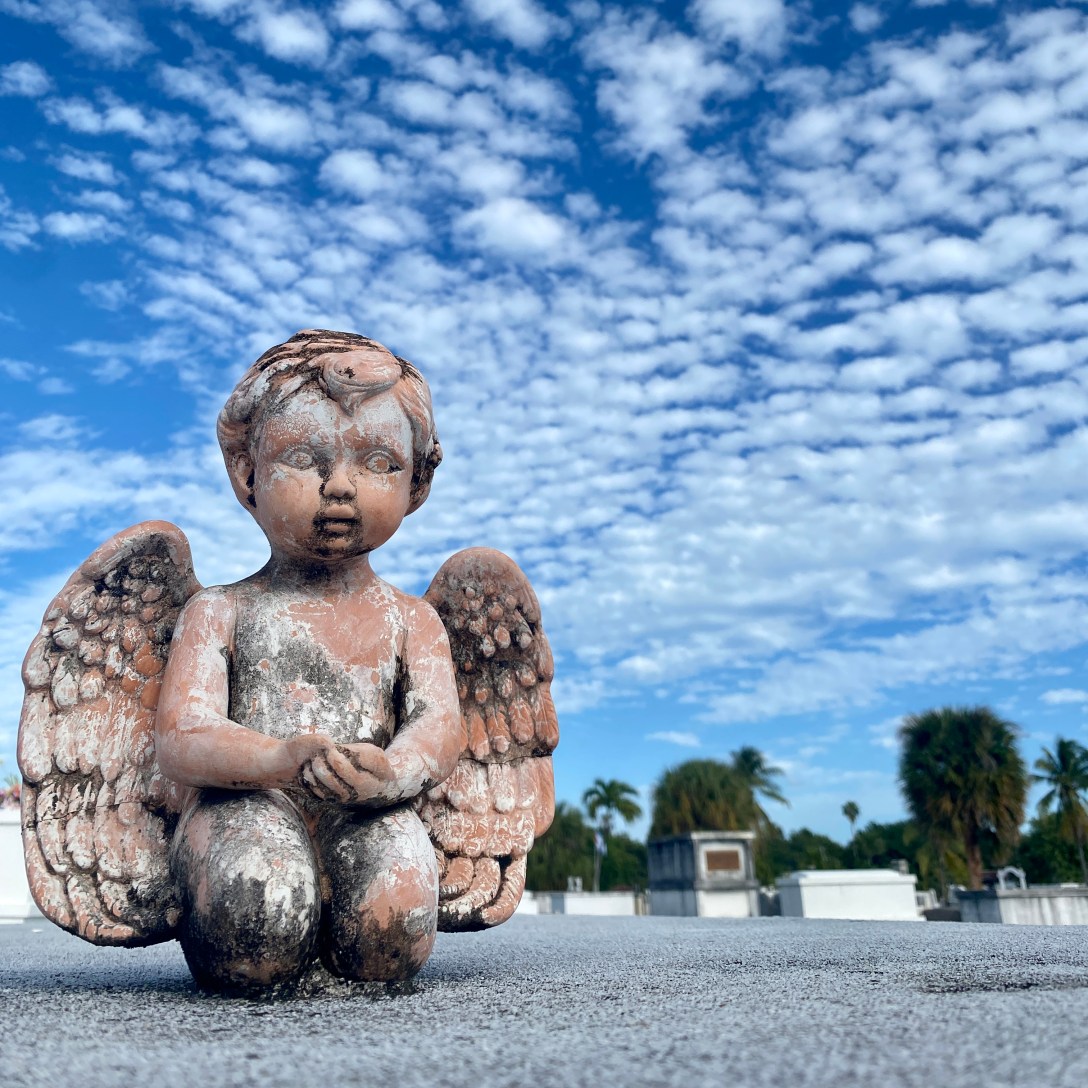
Today I wandered into an island cemetery, through palm trees and cracked stone. I felt lighter than I had in weeks. Life was demanding to be acknowledged everywhere I turned. A baby palm tree pushing up from the ground between headstones. An iguana sunning itself on a grave. A bird alighting on the head of an angel. In the cemetery, I wasn’t in a place of death at all, especially not in the sunshine, with the grass shining greenly underfoot. I was reminded of Whitman, who wrote in Song of Myself, “the smallest sprout shows there is really no death” (full excerpt is below). When I got home, I opened Rumi, searching for language to color this discovery. I found it in this poem:
Dissolver of sugar, dissolve me,
if this is the time.
Do it gently with a touch of a hand, or a look.
Every morning I wait at dawn. That’s when
it’s happened before. Or do it suddenly
like an execution. How else
can I get ready for death?
You breathe without a body like a spark.
You grieve, and I begin to feel lighter.
You keep me away with your arm,
but the keeping away is pulling me in.
While Whitman asserts that death doesn’t exist, Rumi speaks of a sudden dissolving in death, a lightness. Both reflect the feeling I had today: that death is never permanent. Something will always disintegrate and decay, and something else will always grow from the dissipated energy of the decayed thing. The graves today were filled with life. Grieving really does make us feel lighter, as Rumi notices in this near-perfect poem. Giving space to the darkness in us, being vulnerable and letting parts of ourselves die, can allow light to come in.
Full excerpt from Song of Myself (Leaves of Grass) by Whitman:
Or I guess the grass is itself a child, the produced babe of the
vegetation.
Or I guess it is a uniform hieroglyphic,
And it means,
Sprouting alike in broad zones and narrow zones,
Growing among black folks as among white,
Kanuck, Tuckahoe, Congressman, Cuff,
I give them the same, I receive them the same.
And now it seems to me the beautiful uncut hair of graves.
Tenderly will I use you curling grass,
It may be you transpire from the breasts of young men,
It may be if I had known them I would have loved them,
It may be you are from old people, or from offspring taken soon
out of their mothers’ laps,
And here you are the mothers’ laps.
This grass is very dark to be from the white heads of old mothers,
Darker than the colorless beards of old men,
Dark to come from under the faint red roofs of mouths.
O I perceive after all so many uttering tongues,
And I perceive they do not come from the roofs of mouths for
nothing.
I wish I could translate the hints about the dead young men and
women,
And the hints about old men and mothers, and the offspring taken
soon out of their laps.
What do you think has become of the young and old men?
And what do you think has become of the women and children?
They are alive and well somewhere,
The smallest sprout shows there is really no death,
And if ever there was it led forward life, and does not wait at the
end to arrest it,
And ceas’d the moment life appear’d.
All goes onward and outward, nothing collapses,
And to die is different from what any one supposed, and luckier.
On Teaching
I don’t often get to talk about my teaching, even though it is arguably the most important thing I do. People usually ask what shows I’m playing next, and how the album recording is coming along, but they don’t really ask me how my 15-year old student is doing on her new composition, or if my 9-year old has learned how to play minor scales yet. I guess teaching piano isn’t as glamorous as getting dressed up and rocking out onstage. But glitz isn’t everything. I think teaching a really inspiring piano lesson to just one student can be as impactful as performing for a big crowd.
When I was 19, I volunteered for a community music school in Montréal to teach free music lessons to kids in underserved boroughs outside of the city. I was fresh out of teaching piano for most of my teen years at Summer Sonatina Piano Camp, plus a couple years of private teaching out of my parents’ house in Vermont, and I was so excited to meet all of my new students. It turned out that we didn’t have enough keyboards for more than one weekly private piano lesson. So I had a single student. Their name (changed here for privacy) was Sam.
The first thing I remember about Sam was their shoulders, which they held slightly slumped forward at all times, as if trying to shrink away from something. From the way they observed me, and the little remarks they made, I could tell they were strong and intelligent, and as soon as we started lessons that intuition was confirmed. We set up our little 76-key keyboard in an empty classroom in their middle school, right in front of the chalkboard by the door. The classroom was messy, and totally ill-suited for a piano lesson, but we jumped right in anyway.
Sam had no musical experience, except for playing around on a little keyboard they had at their house. I showed them how to place their hands on the keyboard, how to keep their fingers strong while they played, and where middle C was. They absorbed everything so quickly, and so completely. I had honestly never taught a student before who could master concepts that fast. It was incredibly fun for me, and Sam was eager to play whatever pieces I brought in for them. We learned chords, scales, arpeggios, and were playing stuff hands together way sooner than I thought someone could. I think one of the last pieces I assigned was Sonatina in C by Clementi, which I usually don’t assign until I’ve been working with a student for at least a couple of years.
I remember one day, we had just sat down at the keyboard, and Sam noticed my earrings. “Why are you wearing mismatched earrings?” they asked me. I felt my earrings, trying to remember which ones I put on that morning, and they were indeed mismatching. It was something I did a lot back then, in defiance of expectations mostly, and partly simply to show people that I was a badass. I smiled. I said, “I’m wearing them because we can do whatever the hell we want. Who says earrings have to match? It’s a silly rule.” They gaped at me, then laughed. I know that message stuck with them.
I know because as the semester progressed, they started sitting down at the piano as if they belonged there. And not just a belonging at the piano. A belonging in the space they inhabited. In the world. Their shoulders weren’t slumped anymore – they sat upright, ready, alert, believing in themselves. In the beginning, they would call themselves stupid or lazy in almost every lesson. And every time, I would tell them that they were smart, hardworking, and capable. Because it was fucking true.
The music was just an avenue for me to help them find confidence in themselves. It was proof that they could excel at something. It was proof that the school system that put them in the “stupid people math classes,” as Sam would call them, was just plain wrong. They slowly realized that they had the power to do whatever the hell they want.
That’s why piano lessons are so fucking awesome.
Help me continue writing & making art
Help me continue writing & making art – every month
Help me continue writing & making art – every year
Choose an amount
Or enter a custom amount
Thank you so very much. Your generosity and support really make a difference.
DonateDonate monthlyDonate yearlyOn People
Honestly, it was the most fun I’ve had in awhile. I sat on the porch of a cafe this afternoon, eating banana bread and sipping a café con leche, and writing about the people I saw. Here are some of the ‘characters’ that inspired me today.
Old guy with defined abs drives a golf cart down the middle of the road.
Middle-aged couple stop to discuss the construction site across the street. They are tan and comfortable with each other, as if they could be walking on the moon and still feel at home together.
Woman wearing a stoic look, a short bob cut, and an old 90s sweater strides past.
Man with wild, stylish white hair smokes a cigarette out of his car window, glancing at me in hopes of some attention.
Two very fat people hunched over on scooters ride by in lurid, pastel-colored shirts.
Trio of old guys stop on the sidewalk to check out a construction site across the street. They speculate. They shade their eyes with their palms. They wonder and exchange ideas. As they move on, a woman I hadn’t seen before falls in line and walks with them silently.
Teenager, lanky, with faded, oversized tie-dye shirt, carries a backpack and looks at their phone intently. Their long, blond hair hides their face as they walk.
Pink-in-the-face guy with cigar and light blue shirt bikes by, adjusting his baseball hat.
Woman with bright blue flowing skirt and skin-tight shirt carries herself like a festival queen.
Very prepared tourist couple come into view with freshly-purchased straw hats and gatorade. They each carry a bag, and stroll in an easy way that allows them to turn their heads in all directions to see the sights.
Two guys drive up in a white van, one driving, one delivering. The delivering one runs out with a single package of toilet paper, jogs the package into the cafe, then leaves. I hear laughter and Latino music as they drive away.
Stylish older couple float by. They both hold themselves with a lot of grace, and have grown their hair out long. The man has arm tats and the woman’s arm is in a sling. She carries a breathy white bag. I inhale and think about my future.
Little girl, about 10, rides in an open-air tour bus, wearing an oversized cream-colored tee shirt, looking off into the distance at nothing in particular. She looks tired. There are little wisps of hair all around her chubby face.
Guy in a white tee hunches over an exceedingly noisy scooter, which is probably about to fall apart.
Woman in black tee and a ponytail points to the cafe, saying “And that’s the coffee house my next-door neighbor used to own.” She’s riding a beach cruiser bike. Her friend, trailing behind on her own bike, looks at the cafe with interest.
A young couple walks by on the other side of the street. Their body language looks a bit dejected, like they’ve given up on something. The man walks slightly in front of the women. She keeps her body in really good shape, him not so much. He takes out his phone as they turn around, probably lost.
Young guy on a scooter holds a guitar in one hand, and steers with the other. He yell-sings “Hey! Come, come on!” as he zooms past me, blond hair flowing and waving wildly in the wind. I smile. How can you not, when someone is singing and scootering.
Once I started noticing all these things, it was impossible not to be interested in every single one of these people. I wanted them to succeed, whatever that meant to them. Once you start noticing, like Mary Oliver once said, you start loving. “Attention is the beginning of devotion.” Here’s the full excerpt, from her collection of essays, Upstream:
“Teach the children. We don’t matter so much, but the children do. Show them daisies and the pale hepatica. Teach them the taste of sassafras and wintergreen. The lives of the blue sailors, mallow, sunbursts, the moccasin flowers. And the frisky ones—inkberry, lamb’s-quarters, blueberries. And the aromatic ones—rosemary, oregano. Give them peppermint to put in their pockets as they go to school. Give them the fields and the woods and the possibility of the world salvaged from the lords of profit. Stand them in the stream, head them upstream, rejoice as they learn to love this green space they live in, its sticks and leaves and then the silent, beautiful blossoms.
Attention is the beginning of devotion.” -Mary Oliver, Upstream
On Joy
One time, my mom gave me a book called 14,000 Things to Be Happy About. It was awesomesauce. I’ve opened it so many times, read for a couple minutes, then closed it with a knowing smile on my face. It even inspired me to ask friends and family to write their own lists of what makes them happy. To this day, I still have the notebook where I collected these various “happiness lists.” Maybe someday I’ll do something with them. Who knows.
I’m tired AF tonight, need to feel a little joy in my body, and don’t want to write anything truly coherent, so here’s my own happiness list, in no particular order:
pot roast slow-baked with beer
a new gel pen
playing a song at a show that makes someone cry
making my own stickers using colored pencils
sharing a meaningful look with a stranger as I walk by them on the sidewalk
waffles with strawberry jam
kids creating their own compositions in piano lessons
a big, clean dining room table
beautiful tea towels
using cash to buy cheap coffee
using coins from my piggybank to buy expensive ice cream
Vans sneakers
biking with someone I love
asking trees for advice
eating raw green beans
my cat’s almost obscene obsession with chasing and eating green beans
getting into bed with clean sheets
biscuits and grits
snuggling on the couch watching a movie, eating popcorn with my partner
mid-solo realizing that this shit actually sounds dope
walking along a river
flourless chocolate cake
holding hands in public
giving someone a gift I’m super excited for them to have
ice-cold lemonade
putting $40 into my retirement account
practicing piano in the morning sunlight
sweet tea
watching a really good Netflix food documentary
seeing a flower I’ve never seen before
Bananas Foster
listening to the birds
moss
eating at a fucking amazing restaurant on my birthday
dessert wine
leather jackets
long dinners with family
walking in cold weather drinking a hot drink
laughing so hard that tears stream down my face
showering after a workout
my cat’s hilarious habit of eating popcorn when I throw it for him
really, really, really, really warm socks
first snow
hugging my mom
getting paid to play music
the moment when the food arrives at the restaurant
snuggling
seeing a butterfly
walking barefoot
going to sleep after a long day of working
swimming in a lake
giving myself a hug
greenhouses
blackberries
cats in laundry baskets
the little moment when my partner joins me in bed after a long rehearsal and whispers “I love you so much” into my hair
homemade tie die shirts
Steinway pianos
balling out and choosing the whole bottle of wine at a restaurant
I could literally do this forever, so I’m gonna cut myself off there and call it a night. Make your own list! Try not to judge what comes out. It’s honestly so fun. I feel better already.
On Body Image
I’m a female musician. That means that in addition to being an incredible musician, I have to be beautiful and toned to be respected. When male hosts introduce me before I come onstage, they often say “the beautiful and talented Siena,” as if somehow saying that I’m beautiful is an adequate introduction to my music. The fact that I’m beautiful actually has nothing at all to do with my music, yet it’s an unspoken requirement that I must stay beautiful to get noticed.
My male counterparts can go out with scruffy hair, unshaven faces, potbellies, and outfits that look like they’ve been slept in. I’ve seen it. Too many times. They can look as ridiculous as they want, and people just focus on the quality of the music they’re playing. But if a female musician goes out with even the hint of a muffin-top, people wonder if she’s really serious about her craft. People start to give unsolicited advice about her weight, about her work ethic, about how much time she’s spending with her family, and about her character. They talk about these things instead of the music she’s creating and putting out into the world.
Yes, there are female artists like Billie Eilish, Lizzo, and Kelly Clarkson who are actively pushing back against the scrutiny that female performers are under about our bodies. Is it enough to make me relax and “let my body go?” No. Plus, I’m speaking as a white woman: I can’t even begin to speak to the much harsher scrutiny of Black female musicians.
So why is it like this? Where does this pressure come from? Let’s take Women’s Health Magazine as just a small example of the cultural prevalence of scrutinizing women’s bodies. First of all, “health” is in the title, but this publication focuses mostly on diet and weight loss. It equates health with being super thin and toned. This is bullshit. Health is not the perfect body. Health is not obese, either. Health is somewhere in between. Health has nothing whatsoever to do with how we appear, past a certain threshhold (obviously someone with a grey and clammy complexion isn’t doing too well).
In an article about Lady Gaga’s body in her 2017 Super Bowl HalfTime performance, Women’s Health Mag tried to claim that people shouldn’t (and generally don’t) scrutinize the bodies of female performers. The magazine paints a utopian portrait of a world that doesn’t care how a woman looks. This is just simply false. You can read Fox’s report on the actual comments made on Twitter about Gaga’s body. Everyone, including women, scrutinize women’s bodies. I do it, you do it. We all do it. Some see an imperfect female body and say “it’s too bad she let herself go.” Some just subconsciously respect her a little less. They think she doesn’t deserve their respect because she doesn’t respect herself enough to starve herself and work out for hours each day.
Even WHILE Women’s Health Mag describes this fantasy world where society is beyond criticizing women’s bodies, they display other shit that reveals quite the opposite. Literally on the same page. Here’s a smattering of other stuff you’ll encounter as you scroll through this article:
1) a video explaining “Grocery Shopping for a Healthy Lifestyle,” which dictates how to to avoid tempting bakery items that are sure to “derail your diet” by carefully planning your route in a grocery store, all while depicting extremely thin women picking up fruits, vegetables and, of course, Grape Nuts
2) the “Workout Advice” section at the bottom of the page, which boasts results like “visibly toned abs” and “sculpted arms”
3) the “Must-Have Fall Athleisure Styles” section, showing a sporty woman looking alluringly at the camera
Clearly, Women’s Health Mag knows that women are CONSTANTLY under the scrutiny of the public. They not only know it, but they are actually making a shit-ton of money off of that reality. Despite reporting in another article that “when people (feel) bad about their bodies, they (are) more likely to experience…a cluster of health issues,” the magazine proceeds to make women feel bad about their bodies throughout their website. Here’s the cherry on top: down at the bottom of the screen in small letters, you can click a link that reads “PEOPLE WITH THIS TRAIT HAVE SMALLER HIPS AND BELLIES.” This ‘enticing’ (and shaming) headline leads to a page that displays an ad for “Belly Rehab” and plenty of “How to Lose Weight” articles. So much for us living in a world where shaming Lady Gaga for having stomach flab is outrageous, blasphemous, and “unheard of.” The haters are here to stay, folks.
I’m not sure how to navigate this world. I’m not ready yet to give up the patriarchal idea I’ve been brainwashed with: that I have to look “good” (aka not flabby) to be taken seriously in the music world as a female musician.
On Settling
I was born in 1995. I’m smack-dab in the middle of the “Millennial” generation. I grew up on VHS tapes, landlines, and tucked-in turtlenecks, but never used a payphone or a record player. I was taught that I was special, that my unique capabilities and personality made me perfectly suited for…something. Whatever that ‘thing’ was, be it a person, a job, or a lifestyle, I was meant to find it, pursue it, and never settle for anything less.
This ‘thing’ wasn’t supposed to pay my rent, or provide a stable life. Nope. That wasn’t the priority. Instead, it would supposedly make me happy. It would fulfill my potential. That was the ultimate goal: to fulfill my potential for joy, for being fully human. This ‘thing’ would make me fully myself.
Settling was supposed to feel like boredom, stagnation, or mundanity. Notice a small lack of passion for your partner? You’re settling. Don’t feel quite right all the time in your job? You’re settling. Doing mundane work that doesn’t seem to have a higher purpose other than putting food on the table? You’re settling.
So yeah. It turns out that “not settling” can be pretty confusing. The “not settling” mentality can keep you from actually living fully. It’s making us more anxious, less happy, and just generally less OKAY. It’s as if we owe it to the world, to the universe, to never settle. Because to do that would be to rob everyone else of our gifts. This messaging is constantly pushed down our throats in ads, Instagram posts, and media, generally aimed at us “snowflake” Millennials:
“Don’t stay in a boring job.”
“Follow your bliss.”
“Find your purpose.”
“Be uniquely you.”
“Never compromise yourself.”
“Your perfect person is out there, you just have to make room for them in your life.”
This shit doesn’t lead to happiness or fulfillment. Because we’re never gonna get there. “There” is always changing. We’re always searching, striving for the next best thing, and we’re never gonna feel present. Not only are we never sure if we’re doing the right thing, because we’re terrified of settling, but we’re also just not attending to the miraculous, ordinary shit that’s happening in our lives.
Then, there’s the constant questioning. It takes a toll. It’s exhausting. It’s anxiety-inducing. As my partner Chris wisely said when I mentioned I was writing this piece, “If you don’t settle for something, you never get to enjoy anything.”
Then, there’s the issue where “not settling” can trick you into thinking that you’re moving on to bigger and better things, when really, there you still are. The same ‘you’ that you’ve been dealing with this whole time. You don’t all of a sudden grow wings and a halo because you move to a different house, or meet somebody new, or create a new online business where you print inspirational quotes on stuff.
And, the more I think about it, the more “not settling” feels like avoiding real connection and growth. If you don’t settle into something, you don’t ever have to compromise. You never grow in relation to another person, or in the context of a challenge. You’re an island. You’re holding out for your “best” self, in the form of the “best” thing outside of yourself. You’re a self-perpetuating carousel.
The real question is not, “Am I settling?”
The question is, “Is there something hurting in me that I need to attend to?”
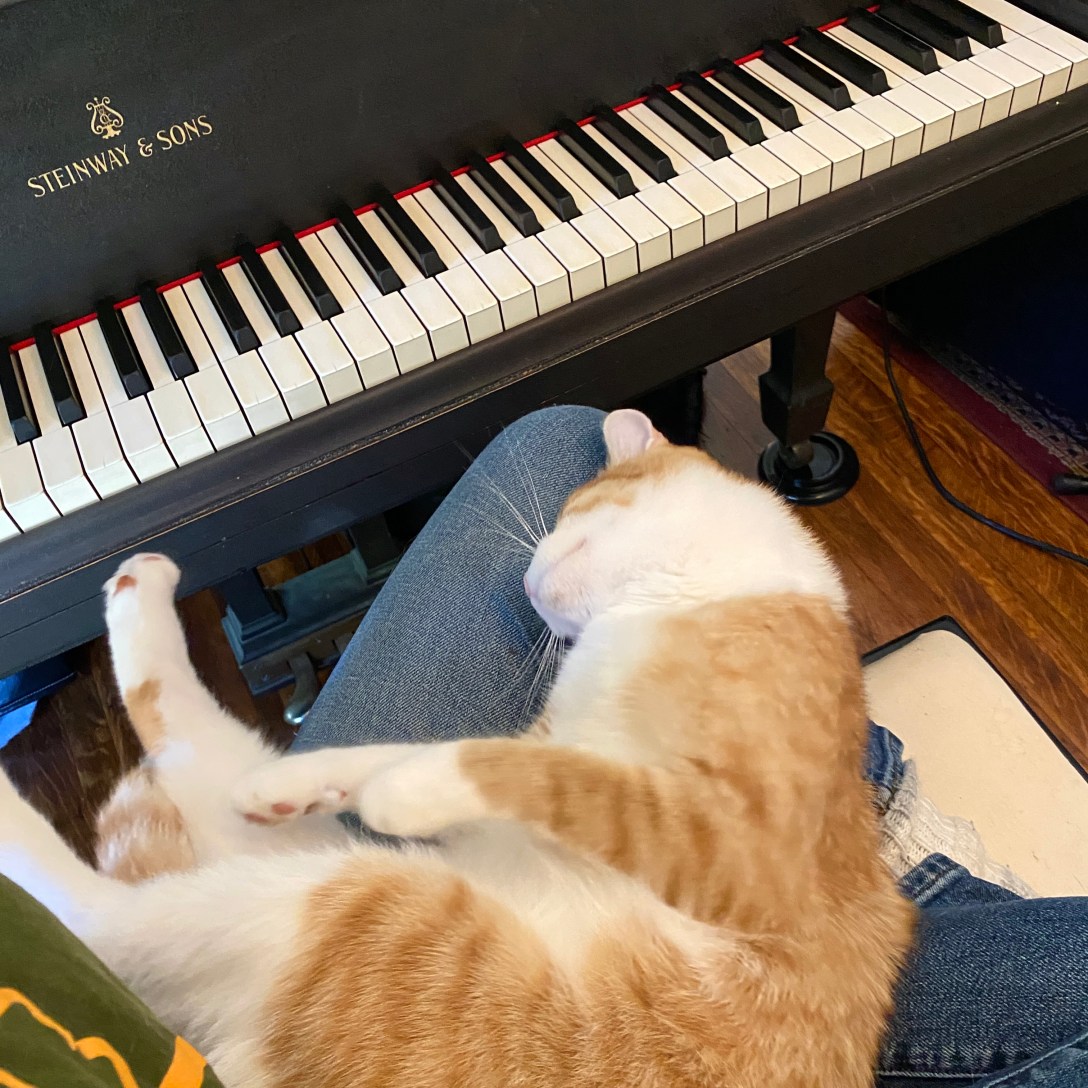
Here’s the heart of it for me: “not settling” means running away from the mundane. But the mundane moments in my life are what make it all worth it for me. My cat jumping up onto my lap while I practice piano. My partner making us egg sandwiches for breakfast. Drinking a cup of coffee in the morning. Finding a great radio station on a road trip. Listening to a particularly poignant podcast. Looking out into the trees through the big window in my office, forgetting about my to-do list for a second. This is it. And I’m not selling myself short because I actively love, notice, and cherish those things.
From now on, I want to stop avoiding settling. Fuck it. I’m rebelling against all the messaging. I want to be present. I want to be bored. I want to revel in the absolute miracle that we’re here, on this earth, together, and alive. And I don’t want to do it in Bali. I want to do it in my fucking living room.
On Desire
I’m lying in a hotel bed, halfway between New York and Florida. I’m escaping, in a sense. From what, I’m not entirely sure. I could be slithering away from my relationship, which looms around me, a dark mass of supportive, attentive love. Sometimes it disgusts me, how such a broken, oozing creature like myself could be immersed in this golden affection. Or maybe I’m sneaking out of my roomy upstate New York house, so secure, so stifling, like someone is ever so slowly smothering my breath away with a goose-down pillow.
Or, if I’m lucky, I am escaping expectations: my own urgent hope that I will fulfill my potential (whatever the fuck that means), my partner’s hope that I will be kind, my students’ hope that I will be inspiring, my fans’ hope that I will be entertaining, Instagram’s hope that I will be beautiful and toned, and my community’s hope that I will “leverage my privilege.” Other people’s dreams lodge in between my ribs like congealed Mod Podge. I’m not sure if this dripping, monstrous glob is concealing my desire, or if it’s gradually forcing desire out of me forever.
Or, maybe, I’m escaping myself. If I’m being really honest, I might be running away from my own stubborn refusal to allow my desire to take up space. Sometimes (often) I am disgusted by my own light. It threatens to burst out, innocent, enthusiastic, from tiny cracks in the thick fortress I’ve built around my Self. How dare this light come out. How dare any light get in at all. How dare I want my light to be seen. How dare I inspire light in someone else. How dare I desire. How dare I desire.
What is desire, anyway?
To me, desire is fear. Desire is the stealthy siren, leading my body to the sharp crags and unrelenting surf beating down on the shore. Desire knows that I am both the shore and the body, and it resolves to take full advantage of that. Desire doesn’t care about consequences, doesn’t delight in hierarchies or flowcharts.
Desire is wild, and wild is fear.
Wild is disintegration. Loss of self. Loss of control. Loss of power. Loss of everything. Desire doesn’t take with cautious fingertips. It takes and takes and takes, scooping great mounds into its calloused hands.
Is it possible to draw a line between joyful attraction, bubbling over in rainbow colors, and dangerous obsession? Could I pinpoint the moment when something pleasant suddenly turns rank and insidious? Would I even realize that anything had shifted at all? Would I notice that I was disappearing before the last wisp of me fell away?
“But,”
you might ask,
“if the desire is yours, yours alone,
can’t you trust it?”
That remains to be seen.
On Childhood
childhood dream place
wings and moss in abundance
light shining through us